Overview
Fuel gas conditioning is a critical upstream process step in any compressor station design. Before natural gas can reliably power engines, turbines, fired heaters, or instrument systems, it must be brought to a precise specification — clean, dry, heated, and pressure-regulated. Operators who underinvest in this portion of the system inevitably face the downstream consequences: regulator freeze-offs, liquid carryover events, combustion instability, and unplanned shutdowns.
At CROFT Production Systems, we engineer fuel gas conditioning packages from a process-first perspective. That means every skid is sized and configured around actual operating conditions — not a generic template.
What Fuel Gas Conditioning Must Accomplish
A properly engineered fuel gas conditioning system performs four core functions:
- Separation and filtration — Removal of free liquids, condensate, water, rust, scale, pipe scale, and particulate matter that would otherwise foul regulators, burner tips, and engine fuel systems.
- Heating — Prevention of Joule-Thomson cooling effects during pressure reduction, which can cause hydrate formation, ice plugging, and regulator freeze-off. Heat duty must be calculated specifically for the pressure drop across the system and gas composition.
- Pressure regulation — Stable, accurate downstream pressure delivery to combustion equipment. Improperly sized regulators introduce instability that directly affects engine performance and emissions.
- Protection and monitoring — Pressure safety valves, slam-shut valves, differential pressure monitoring, and temperature instrumentation to ensure safe, continuous operation.
Any system that compromises on one of these functions is not fully conditioned fuel gas — it is partially treated gas that will eventually cause equipment failure.
Why Compressor Station Fuel Gas Is Particularly Challenging
Field gas at compressor station inlets is rarely clean or stable. Depending on the gathering system and producing formation, operators may see:
- Free liquid slugs from low points in upstream piping
- Condensate and heavier hydrocarbon fractions
- Water vapor at or near saturation
- Sand, scale, and debris from aging pipeline infrastructure
- Significant pressure swings as well rates fluctuate
Additionally, pressure reduction from supply pressure down to engine fuel supply pressure — sometimes 500 PSIG to 30 PSIG or more — creates substantial Joule-Thomson cooling. Without adequate pre-heating, the gas temperature at the regulator outlet drops well below hydrate formation conditions, and freeze-off events become routine.
This is not a scenario where a basic filter separator is sufficient. It requires an engineered heating and separation package designed around the actual pressure differential, flow rate, and gas composition at that specific location.
Common System Configurations of Fuel Gas Conditioning Systems
Filter Separator Only Suitable for mild climates with minimal pressure drop and relatively dry gas. Provides basic liquid removal but no freeze protection. Not recommended for most compressor station applications where pressure drops are significant.
Inline Heater with Upstream Separation Adds thermal protection before the regulator, but typically requires separate piping systems and multiple skid footprints. More appropriate as a retrofit than a primary design.
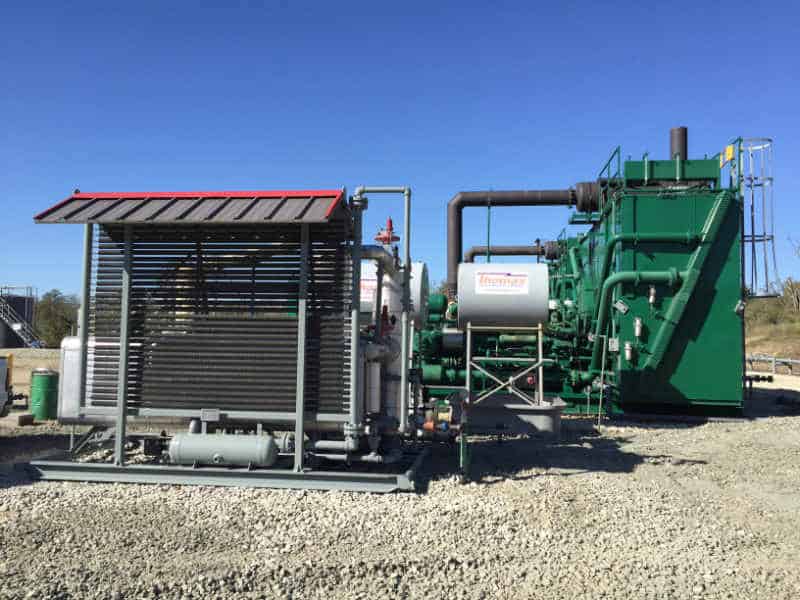
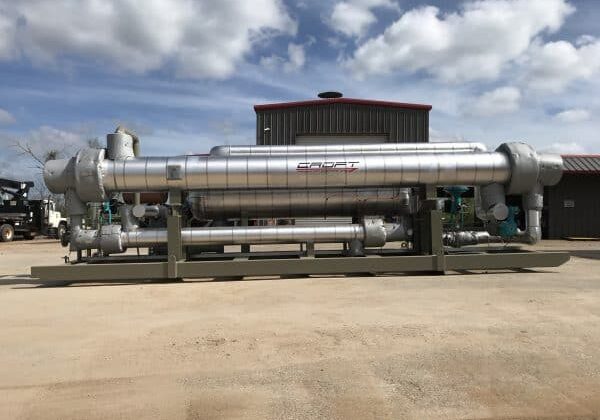
Integrated Fuel Gas Conditioning Skid The industry-standard approach for compressor stations and midstream applications. A single engineered package incorporating separation, coalescing filtration, direct-fired or indirect heating, pressure regulation, safety devices, instrumentation, and controls. This configuration minimizes piping complexity, reduces installation cost, and delivers a proven, tested system to the field.
CROFT designs and fabricates integrated fuel gas conditioning skids for applications ranging from small wellhead compressor stations to large midstream facilities.
How CROFT Approaches Fuel Gas Conditioning Design
Our engineering process begins with the process data — not a catalog selection.
Process Sizing We calculate heat duty based on actual pressure drop, gas flow rate, and composition. Undersized heaters are one of the most common causes of recurring freeze-off problems in the field. CROFT heaters are sized with adequate margin for ambient temperature swings and operational variability.
Separation Efficiency Coalescing filtration stages are selected based on expected liquid loading. Systems handling gas with high liquid content require appropriately rated coalescer elements and liquid collection capacity. We do not apply the same separator specification across all applications.
Regulator and Control Valve Selection Regulator sizing is matched to the minimum and maximum flow range at the station. Oversized regulators hunting at low flow or undersized regulators creating excessive pressure drop are both design failures that proper engineering prevents.
Safety Systems Every CROFT fuel gas skid includes pressure relief protection, slam-shut over-pressure and under-pressure protection where required, and a system that meets applicable codes and operator specifications.
Instrumentation and Automation We integrate temperature transmitters, pressure transmitters, differential pressure monitoring, and PLC-based controls where required. Operators receive real-time visibility into system performance and alarm conditions.
Fabrication Quality CROFT skids are built to a standard that reflects the service they will perform. Clean piping layouts, properly supported instrumentation, structural integrity in the skid frame, and attention to maintenance accessibility are not optional considerations — they are part of how we build every package.
Total Cost of Ownership: Why System Design Drives Long-Term Operational Economics
Capital expenditure is the most visible number in any equipment procurement decision, but it is rarely the most significant one over the life of a compressor station. For fuel gas conditioning systems specifically, the gap between a properly engineered package and a low-cost alternative tends to widen considerably once equipment is in continuous field service.
The Real Cost Drivers
The operational cost of a fuel gas conditioning system is determined by several factors that have nothing to do with the purchase price:
Unplanned Downtime A compressor station that shuts down due to a regulator freeze-off, liquid carryover event, or fuel supply interruption is not generating throughput. Depending on the gathering agreement, pipeline contract, or production commitment in place, downtime has a direct and calculable dollar value per hour. A single extended shutdown event can exceed the cost difference between a properly engineered system and a budget alternative. Operators who have experienced recurring freeze-offs on undersized or poorly heated systems understand this arithmetic well.
Maintenance Labor Skid layout and component accessibility directly affect how much technician time is required for routine maintenance. A poorly configured skid — crowded instrumentation, inaccessible filter housings, regulators positioned without adequate wrench clearance — turns a 30-minute filter change into a two-hour job. Across a fleet of compressor stations, that labor multiplier is significant. CROFT designs with maintenance access as a primary consideration, not an afterthought.
Component Replacement Frequency Equipment operating outside its design envelope wears faster. Regulators cycling continuously due to oversizing, coalescer elements plugging rapidly due to undersized liquid handling capacity, heater tubes running at elevated temperatures due to insufficient heat transfer area — all of these shorten service intervals and increase parts consumption. Proper process sizing at the engineering stage reduces component stress and extends service life.
Energy Consumption Fuel gas heaters that are oversized or poorly controlled consume more fuel than necessary. On a direct-fired system, that fuel cost accumulates continuously. On facilities with emissions monitoring or fuel gas accounting, excessive heater fuel consumption can also affect emissions reporting and compliance calculations.
How Operator Changes Affect Operating Expenditures
Compressor stations are not static operations. Producing wells decline, new wells are brought online, gathering system pressures shift, and operational priorities change. Each of these variables can materially affect how a fuel gas conditioning system performs — and what it costs to keep it running.
Changes in Inlet Pressure As reservoir pressure declines over the life of a field, supply pressure to the compressor station typically decreases as well. A fuel gas conditioning system engineered for high-pressure inlet conditions may see its heating and separation performance shift as inlet pressure drops. If the heater was sized specifically around a high-pressure, high-pressure-drop scenario, a lower inlet pressure scenario may actually reduce freeze risk — but it may also affect regulator performance if the downstream pressure setpoint is no longer achievable at reduced inlet pressure. Operators who anticipate pressure decline during the design phase can specify systems with adjustable regulation stages or wider operating envelopes, avoiding a costly retrofit later.
Changes in Gas Composition Rich gas from new producing zones, condensate-heavy streams from different formations, or gas with elevated water content will load a separator and coalescing system beyond its original design basis. An operator that ties in a new producing area into an existing gathering system without reassessing fuel gas conditioning capacity may find liquid carryover increasing, element changeout frequency accelerating, and combustion equipment reliability declining. Changes in BTU content also affect engine fuel system performance — high-BTU gas can create over-firing conditions if the fuel supply system is not adjusted.
Changes in Operating Throughput Compressor stations are often expanded as gathering systems grow. Adding compression capacity means higher fuel gas demand. A fuel gas conditioning skid originally designed for one or two compressor units may be undersized in heating capacity, filtration area, or flow capacity when a third unit is added. Operators who fail to reassess fuel gas system sizing during compression expansions often discover the deficiency during cold weather operations, when heating demand peaks and the system cannot keep pace. CROFT can engineer expansion capability or modular add-on capacity into initial skid designs for operators with known growth plans.
Staffing and Operational Model Changes The shift toward unmanned or remotely monitored compressor stations has direct implications for fuel gas system design. A station that was previously visited daily by a lease operator who could manually address a freeze-off or swap a filter element now needs a system that can operate reliably for longer intervals without intervention. This changes the required specification: larger filter element capacity to extend changeout intervals, more robust automation and remote alarming, redundant regulation where continuous operation is critical, and more conservative sizing margins throughout. Operators transitioning to a lower-touch operational model who do not revisit their fuel gas system specification may find themselves responding to more field calls, not fewer.
Regulatory and Emissions Changes: Environmental regulations affecting compressor stations have tightened significantly and continue to evolve. Fuel gas system performance directly affects combustion quality, which in turn affects engine emissions output. Operators facing more stringent NOx, methane, or HRVOC requirements may find that poorly conditioned fuel gas — with liquid carryover, BTU variability, or pressure instability — is contributing to emissions exceedances. Upgrading fuel gas conditioning quality can be a lower-cost compliance pathway than engine modifications or operational curtailments.
Cost Increase Scenarios to Anticipate
Several operational changes predictably drive fuel gas conditioning costs upward if the system was not designed to accommodate them:
- Liquid loading increases due to new tie-ins or formation changes, leading to accelerated coalescer element consumption and potential downstream damage
- Pressure decline requiring regulator adjustment or replacement if the original sizing no longer covers the new operating range
- Cold weather events exposing undersized heaters that performed adequately in moderate conditions but cannot maintain adequate outlet temperature during hard freezes
- Throughput expansion that pushes flow velocity beyond separator design limits, reducing liquid removal efficiency
- Extended unattended operation revealing that filter and element service intervals are too short for the new operational cadence
Each of these scenarios has a cost resolution — but that cost is consistently lower when the original system was engineered with adequate margin and flexibility than when it was specified to the minimum.
Cost Reduction Opportunities Through Proper System Design
Conversely, operators who invest in properly engineered fuel gas conditioning systems frequently realize cost reductions in areas that are less visible but equally real:
- Reduced engine maintenance costs as combustion equipment operates on consistently clean, dry, pressure-stable fuel gas
- Extended regulator and valve service life when liquid and particulate carryover is eliminated
- Lower technician dispatch frequency when systems are designed for longer service intervals and remote monitoring capability
- Reduced emergency maintenance premiums when unplanned shutdowns driven by fuel gas system failures are eliminated
- Improved fuel efficiency on well-controlled, properly heated systems compared to oversized or improperly controlled heaters
The cumulative effect of these reductions, measured across a multi-year operating period and across a fleet of stations, represents a significant return on the incremental investment in engineering quality.
Properly specifying a fuel gas conditioning system is fundamentally a risk management decision. The capital cost is a one-time expenditure. The operational consequences of an undersized or poorly engineered system recur for the life of the equipment — and in many cases, compound as the operating environment changes. CROFT engineers systems to perform not just at initial startup conditions, but across the realistic range of conditions a compressor station will experience throughout its producing life.
Applications for Fuel Gas Conditioning Systems
CROFT fuel gas conditioning systems are deployed across:
- Upstream wellhead and field compressor stations
- Midstream gas gathering and boosting stations
- Transmission pipeline compressor facilities
- Gas processing plant fuel systems
- Instrument gas supply systems
Contact CROFT Production Systems
If your compressor station requires a new fuel gas conditioning package, a heater and filtration upgrade, or a complete engineered skid replacement, CROFT Production Systems can develop a solution designed specifically for your operating conditions.
Contact our engineering team to discuss your application.
Contact CROFT today!
Contact us today, call our office to talk to a sales representative or email [email protected]