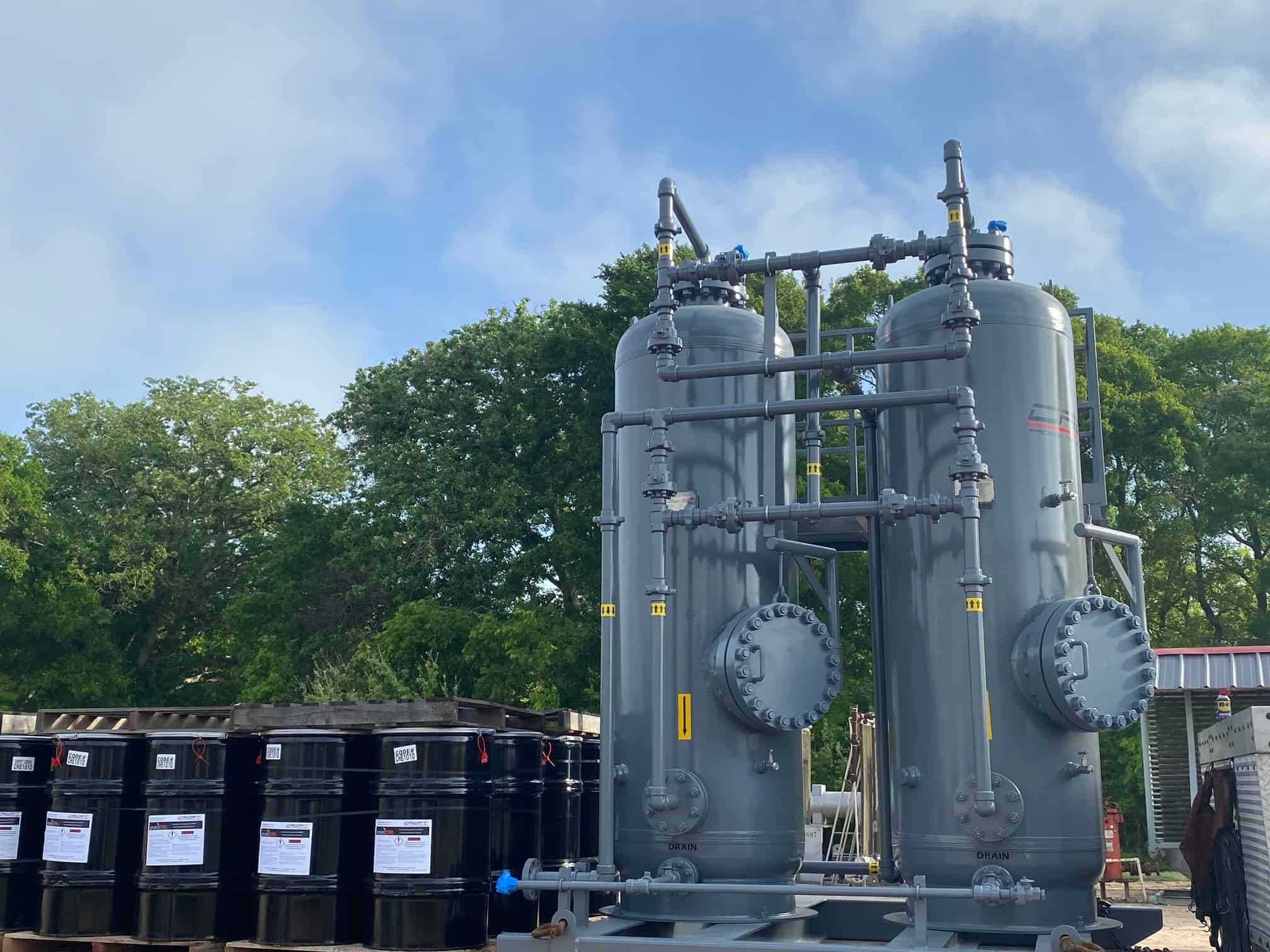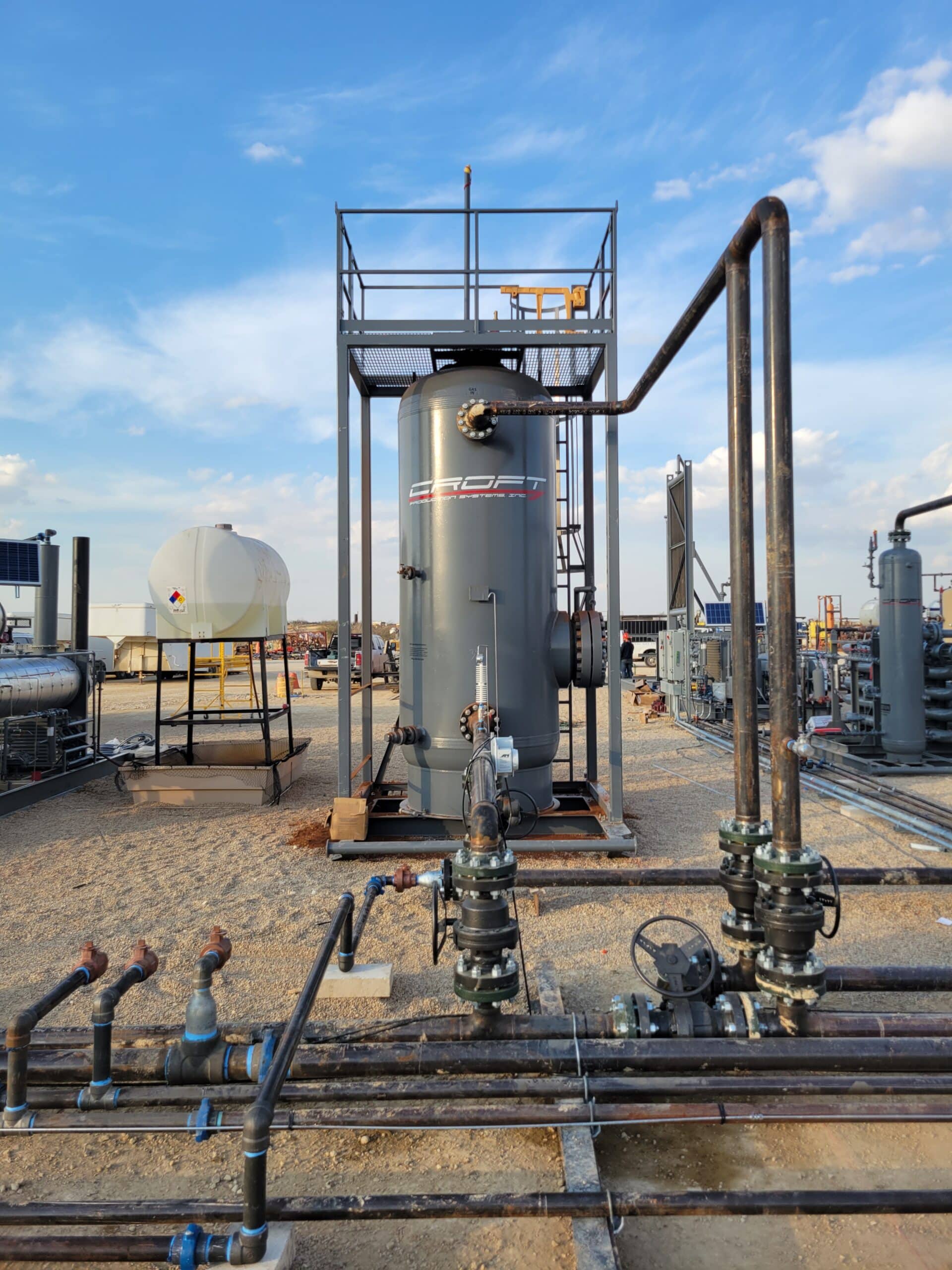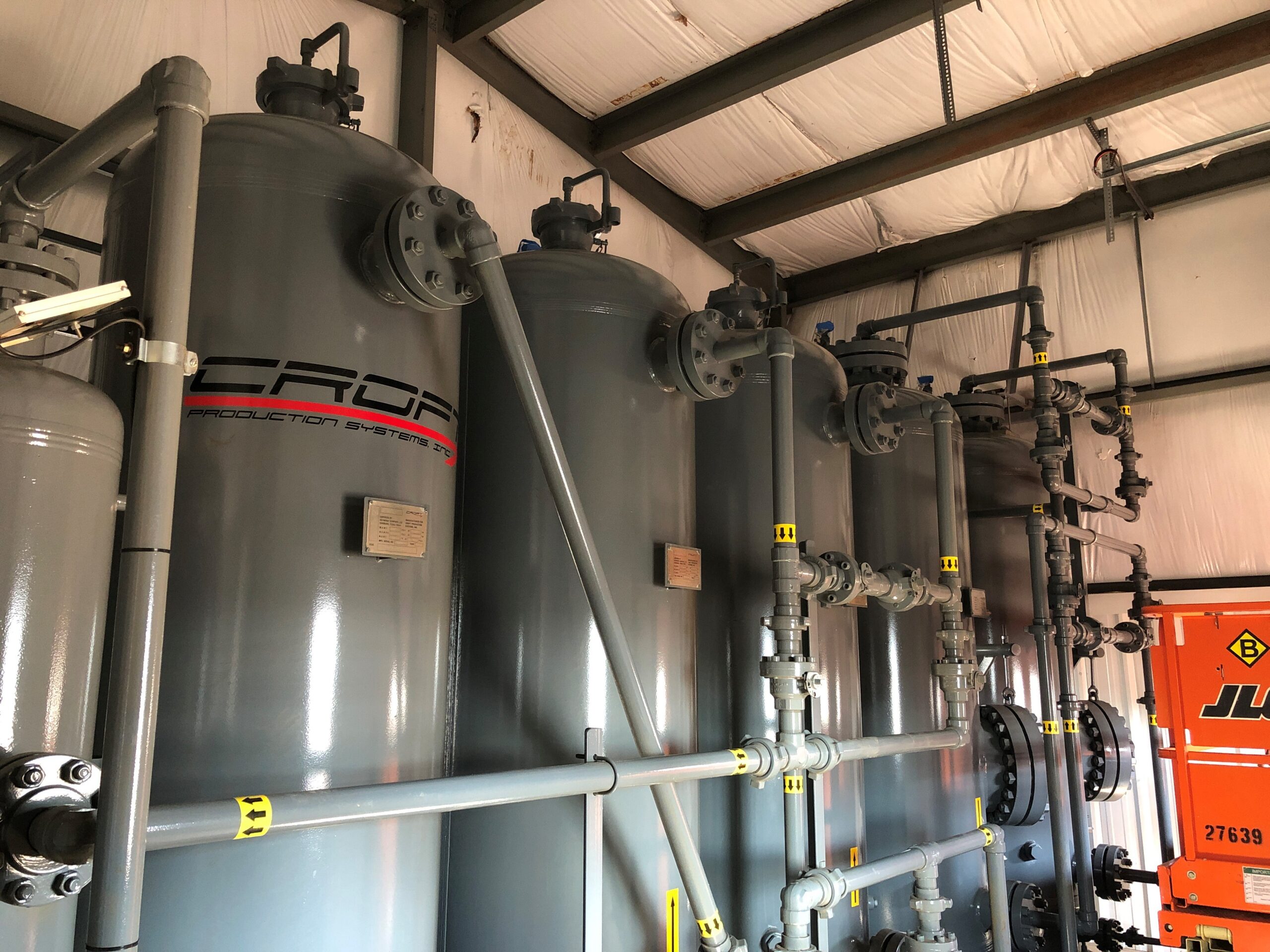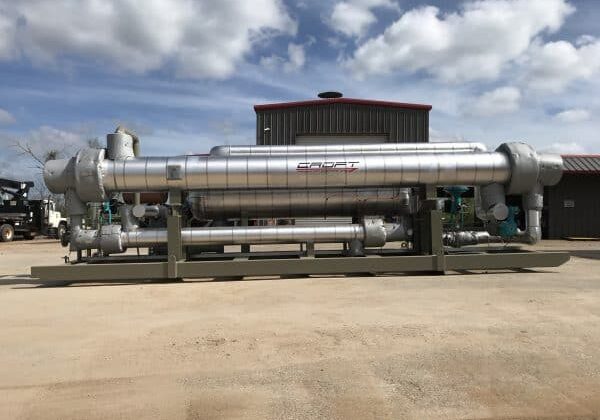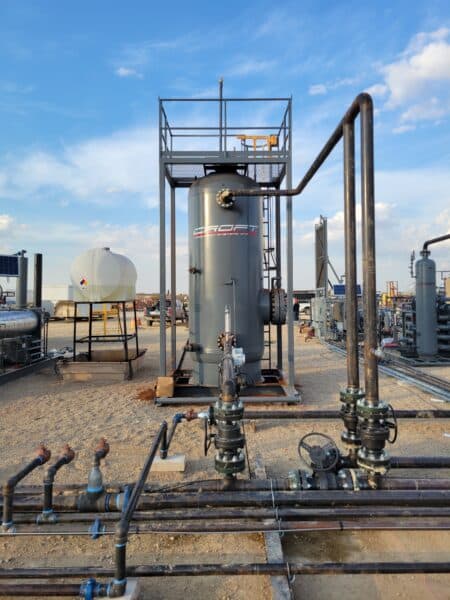

In the world of natural gas midstream and upstream operations, hydrogen sulfide (H2S) is a constant adversary. Left untreated, it corrodes infrastructure, poses severe health risks, and prevents gas from meeting pipeline quality specifications. Among the various desulfurization technologies available, Iron Oxide Systems (IOS)—often referred to as “iron sponge” or “solid bed scavengers”—remain a gold standard for reliability and cost-effectiveness in low-to-medium flow applications.
However, not all IOS units are created equal. Choosing the wrong system can lead to premature media exhaustion, high pressure drops, and dangerous “hot spots” during changeouts.
If you are in the market for an Iron Oxide System, here are the top 10 questions you must ask your vendor to ensure you’re investing in a system that is safe, efficient, and operationally sound.
1. What is the Vessel Design and Media Loading Capacity?
The “iron sponge” process relies on the chemical reaction between H2S and iron oxide particles. To ensure the gas is treated effectively, you need adequate residence time.
- Why it matters: If the vessel is too small for your flow rate, the gas passes through too quickly, leading to “breakthrough” where H2S is still present in the outlet gas.
- The Follow-up: Ask for the superficial gas velocity and the expected contact time. A well-designed system should account for potential future increases in gas volume.
2. How Does the System Manage Heat and Prevent Exothermic Runaway?
The reaction between H2S and iron oxide is exothermic, meaning it releases heat. More importantly, when spent media is exposed to oxygen during a changeout, it can undergo a rapid oxidation process that generates extreme heat—potentially causing a fire.
- What to look for: Does the system include water spray headers or irrigation systems?
- Safety First: Ensure the vendor provides a clear protocol for “wetting down” the media to keep it cool and stable during removal.
3. What is the Expected “Sulfur Loading” Capacity of the Media?
Not all iron oxide media is the same. Some use wood chips as a substrate, while others use high-porosity ceramic or synthetic beads.
- The Metric: Ask for the pounds of sulfur removed per cubic foot of media.
- The Math: High-capacity media might cost more upfront, but if it lasts twice as long as the cheap alternative, you save significantly on labor, disposal, and downtime.
4. How is Pressure Drop Managed Across the Bed?
As the gas flows through the solid bed, the media eventually settles and traps particulates or moisture. This creates a pressure drop.
- The Risk: A high Delta Pressure can choke your production or require higher compression costs.
- Design Solution: Ask if the system uses a lead-lag (series) configuration. This allows you to switch the flow between vessels and replace the media in one bed without shutting down the entire plant.
5. What are the Requirements for Inlet Gas Conditioning?
Iron oxide media requires a specific environment to work. It generally needs high humidity (water vapor) to facilitate the reaction, but liquid water or hydrocarbon liquids can be “death” to the system.
- The Question: Does the system include an upstream separator or filter-coalescer?
- Why: If liquids coat the media, they “blind” the reactive sites, rendering the expensive iron oxide useless before it has even reacted with the H2S.
6. Is the System Designed for “Lead-Lag” Operation?
In a single-vessel setup, when the media is spent, you have to bypass the system (sending sour gas to the flare or shutting in the well).
- The Benefit: A dual-vessel lead-lag system allows the “lead” vessel to do the heavy lifting. Once it breaks through, the “lag” vessel catches the remaining H2S. You can then take the lead vessel offline for a changeout while the lag vessel becomes the new lead. This ensures 100% uptime.
7. How Easy (and Safe) is the Media Changeout Process?
This is where the “hidden costs” of an IOS reside. Removing several tons of spent, potentially pyrophoric material is a dirty and dangerous job.
- The Logistics: Ask about the location and size of the manways. Are they positioned for easy vacuum truck access?
- The Mechanicals: Does the system include internal supports that make gravity-draining possible, or will crews need to enter the vessel (confined space entry)?
8. What Materials of Construction are Used?
While the iron oxide removes H2S, the vessel itself is constantly exposed to it.
- Corrosion Resistance: Ensure the vessel is built to NACE MR0175/ISO 15156 standards for sour service.
- Internal Coating: Ask if the interior of the vessel is epoxy-coated to prevent “wall loss” over years of operation in a moist, acidic environment.
9. How is the Spent Media Disposed Of?
Environmental regulations regarding spent iron oxide vary by region.
- Environmental Impact: Is the spent media considered hazardous waste or can it be “regenerated” or disposed of as non-hazardous landfill material?
- Vendor Support: Ask if the vendor offers a “take-back” program or works with preferred disposal partners who understand the chemistry of spent iron sulfide.
10. What Monitoring and Automation Tools are Included?
In the past, operators had to manually test gas with Dräger tubes every day. Modern systems can be smarter.
- Real-time Data: Ask if the system integrates with SCADA for H2S breakthrough sensing and Delta Pressure monitoring.
- Predictive Analytics: Can the vendor provide software or calculations that predict exactly when the media will be spent based on your flow and H2S concentrations?
Summary Table: Quick Comparison Guide
| Feature | Low-Cost System | Premium Engineered System |
| Vessel Design | Single Vessel (Bypass required) | Lead-Lag (Continuous operation) |
| Media Quality | Low sulfur loading (Short life) | High sulfur loading (Long life) |
| Safety Features | Manual wetting only | Integrated irrigation/quench systems |
| Operational Cost | High (Frequent changeouts) | Low (Extended run times) |
| Compliance | Basic ASME | ASME + NACE Sour Service Specs |
Conclusion Investing in an Iron Oxide System is about more than just buying a steel tank filled with rust. It is about protecting your downstream equipment, ensuring the safety of your field technicians, and maintaining a steady flow of “sweet” gas to the market. By asking these ten questions, you move beyond the “sticker price” and begin to understand the Total Cost of Ownership.
Contact CROFT today!
Contact us today, call our office to talk to a sales representative or email [email protected]