
Introduction
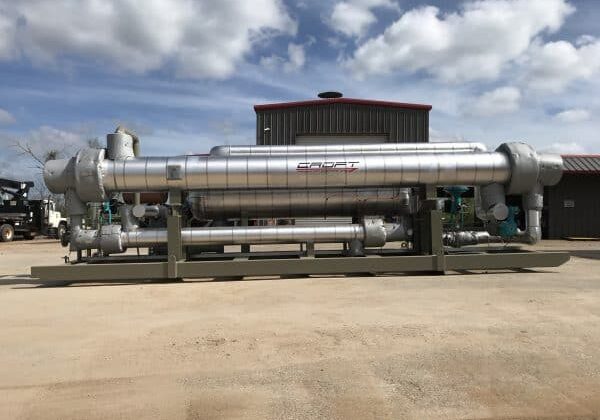
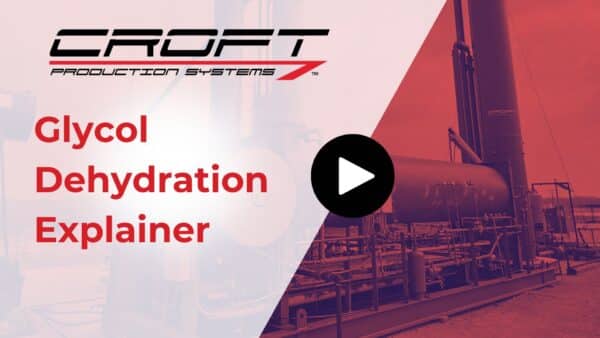
Today we're at a natural gas dehydration unit, often called a glycol system. Now these systems are used to dehydrate the natural gas by removing the water vapor that's present in the natural gas to reduce corrosion and prevent hydrate formation. Now the way this system works is the gas will enter through the contact tower.The contact tower will contact the natural gas with the glycol, where it absorbs the water vapor. That glycol will then go into the regeneration side of the unit, where we boil that water off, purify the glycol before sending it back to the contact tower.
Separation before Glycol Dehydration
The first step in glycol dehydration starts before we even enter the contact tower of the unit. Proper separation is key to making sure that the glycol system does not become contaminated.Now, the way that we typically accomplish this is with some sort of separator filter separator like the one behind me or a coalescing filter.Now, these systems remove free liquid contaminants and particulates that may be in the gas. They could potentially pollute the glycol system and create efficiency issues, are complete failure of the unit.
Glycol Circulation
The glycol comes from our contact tower back here. That rich glycol that's absorbed the water from the natural gas will then go through these kim ray pumps. Now this is unique. If you had electric pumps, it would bypass this process and only goes through them on the lean side.But we have kim ray pumps. We take that high pressure rich glycol and we use it as an energy exchange to depressurize it through the pump, and use that force to pump the lean glycol back to the tower.Now after the pumps, we typically go into our flash separation. Now what this will do is this will remove any entrained gases they got caught in the contact tower, and also any hydrocarbon oils that may have been absorbed as well. We flash that gas off, we skim off that oil out of the separator and we send that cleaner glycol on to filtrationfiltration
Glycol Filtration
After the glycol leaves the flash separator, it, then it heads on to filtration. Now we have two different styles of filters as typically on a glycol system.The first style is the particulate filters. Now with the particulate filtration, we're going for microns down to fifty to twenty five micron to keep the glycol nice and clean.The other style of filtration we have is a carbon filter. Now these are either solid block or granulated carbon that absorbs impurities from the glycol that can cause things like foaming or severe corrosion within the side of the system.Now filtration is incredibly important for the long term health and maintenance of your system. It's very important to make sure these are changed regularlyregularly
Glycol Reboiler
After filtration, the glycol will then enter the heat exchangers that are typically located underneath the reboiler.Now, these heat exchangers exchange the heat of the lean glycol that's leaving the reboiler with the incoming rich glycol to preheat it and reduce fuel cost. Now that glycol, once preheated, will then enter the base of the steel columncolumn
Glycol Burner Management System
A standard glycol system is typically fully pneumatically controlled, but there are some upgrades that you can do to make these systems more operator friendly and to give more visibility to operations. One system we really like is a burner management system.Now what this does is it digitally controls temperature and can relight and light the system, all with the push of a button. This is a great safety addition to have on the units, and also with remote monitoring capabilities, you can see exactly what the system's doing anywhere you want.Other upgrades to this allows too is certain level switches. They can preemptively shut down this system if a levels get too low that may damage the unit.
Glycol Dehydration BTEX
The water vapor that we captured in the glycol is boiled off in the reboiler. That boiled water vapor rises up through the still column. The still column is there to try to recover any glycol that may be trying to leave with that water vapor inside the packing that is inside that column.Now the vapor that leaves the top of the tower will then go typically to an emission control device, commonly referred to as a btec system.The one we have here is a condenser type that will condense out heavy hydrocarbons that may be in that gas stream to separate them out and send them away for disposal. The vapors are then sent either to combustion or reinjection into the burner for their destruction.
Conclusion
In conclusion, dehydration systems are critically important pieces of infrastructure as part of gas processing. By drawing the natural gas, reducing corrosion, and eliminating the risk of hydrates, these systems play a very integral part in making that gas move from the well pad all the way to the end user. But these systems do need maintenance.Making sure that they are properly maintained with occasional cleanouts, consistent filter changes, and maintaining the health and hygiene of the glycol inside the system is very important. And in cropped, we can help you with all those needs.