The Due Diligence Deep Dive: Top 10 Questions to Ask Before Buying a JT Plant
In the upstream and midstream sectors of the oil and gas industry, efficiency, recovery, and regulatory compliance are the cornerstones of profitability. A Joule-Thomson (JT) Plant—a simple, elegant piece of technology leveraging the cooling effect of gas expansion—is often the perfect solution for hydrocarbon dew point control and lucrative Natural Gas Liquids (NGL) recovery.
However, the simplicity of the underlying principle belies the complexity of a fit-for-purpose, reliable, and compliant skid-mounted system. A poor purchasing decision can lead to costly downtime, missed NGL revenue, hydrate formation (freezing), and compliance penalties.
To safeguard your investment and maximize asset performance, you must move beyond the basic question of “What is the price?” and delve into the technical, operational, and commercial bedrock of the plant.
This master checklist outlines the Top 10 essential questions you need to ask every potential vendor.
Part I: The Core Process Questions (What Will the JT Plant Do?)
These questions establish the vendor’s understanding of your feedstock and the plant’s ability to meet your primary financial and regulatory goals.
Question 1: What is the NGL Recovery Rate or achievable Hydrocarbon Dewpoint, and Under Which Specific Inlet Conditions?
This is the most critical performance question because if your goal is NGL’s, recovery often drives the Return on Investment (ROI) for the entire project. And if your goal is Hydrocarbon Dewpoint, HCDP, then not meeting spec means getting shut-in.
The Problem: JT performance is highly sensitive. The NGL recovery percentage (Propane, Butane, Pentanes-plus—typically measured in Gallons per Thousand Cubic Feet, or GPM) is directly dependent on three variables: the inlet pressure, the inlet temperature, and the inlet gas composition (richness). A vendor’s “50% recovery” claim is meaningless without context.
What to Request: A Process Simulation Report that models the predicted NGL recovery for your defined design case (nominal) and worst-case (highest temperature, leanest gas, or lowest pressure drop) conditions.
The Deep Dive: The need for compression often can make or break the economics for a JT unit. Pressure drop determines if the unit can get cold enough to meet your needs and without high enough inlet pressure or too high of an outlet pressure you won’t be able to meet spec.
Question 2: What is the Plant’s Turndown Ratio, and How is Hydrate Formation Managed Across the Operating Range?
Gas flow and composition can vary. Your plant must handle these fluctuations and still meet your requirements.
The Problem: As production declines, reducing gas volume can affect the performance of the JT unit. Lower gas volume means lower NGL recovery, but the plant may also have trouble achieving the same hydrocarbon dewpoint or BTU at lower rates.
What to Request: With Turndown you need to define your minimum expected flow rate (e.g., 20% of design capacity) and ask for the Turndown Ratio. A wide ratio (e.g., 10:1 or 5:1) ensures flexibility. Additional turndown may be as simple as reducing a valve trim, but very low rates may be problematic.
The Deep Dive: If you are expecting high initial rates for only a short time. Ask your vendor about performance with a smaller unit running higher rates. You may find a smaller unit is adequate initially and performance increases as the volume drops off, reducing initial capital cost.
Question 3: Provide the Question 3: How is Hydrate Prevention Managed?
Hydrate formation causing an internal blockage is the most common issue with JT units.
The Problem: The JT effect causes significant cooling. When the gas expands and the temperature drops, the system risks forming hydrates (ice-like structures of water and light hydrocarbons) if the temperature falls below the hydrate formation point. Even with dehydrated gas, typical JT operating temperatures are below the hydrate formation temperature, requiring inhibitor injection.
What to Request: For Hydrate Control the standard solution is a Methanol Injection System. Ask for the specific Methanol Consumption Rate gal/day or L/day across the operating range. High consumption equals high operating expense (OPEX). Typically methanol pumps are pneumatic of solar/electric, confirm with the vendor which option works best for you.
Part II: The Technical Design Questions (How is JT Plant Built?)
Question 4: What should the design temperature of my unit be?
A failure in a cold-service component can lead to catastrophic cracking and leakage.
The Problem: Standard JT units are typically rated to a design temperature of (-20°F) Operating below this temperature can make the metal brittle and lead to catastrophic failure. Units designed to operate below this temperature are built of different materials and are less common and more expensive.
What to Request: Your simulation report should have an estimated cold sep temp. While you unit may be able to achieve <-20°F, it should not be operated below this if not built to those specs. For low temp units, All pressure vessels, piping, and components exposed to temperatures below (-20°F) should be made of Low-Temperature Carbon Steel (LTCS) such as ASME SA-333 Grade 6 or stainless steels like 304L.
The Deep Dive: Colder temps do not always mean better performance. Cold separator temperature must be balanced with operating pressure to ensure optimal recovery/lowest HCDP.
Question 5: Are the JT Valve and Pressure Controller the right option?
The JT valve is the heart of the plant, and its control is what ensures smooth, stable operation.
The Problem: A low-quality or poorly sized JT control valve will exhibit difficulty holding pressure and maintaining temperature, making the operator’s job difficult and leading to process upsets, temperature spikes, or freeze-ups. This often forces the operation into costly shut-ins.
What to Request: Identify the valve manufacturer and model. Ask for the Control Valve Sizing Documentation to ensure the valve has stable, repeatable control across the expected operating range. A well-designed valve should have a properly sized trim for the specific operating conditions, design suitable for high differential pressure, and cold temperature service.
The Deep Dive: Inquire about the pressure controller: Is it a simple pneumatic pressure controller, a more advanced pneumatic, or an electro-pneumatic positioner system? Determine what will best fit your operations and remote monitoring.
Question 6: Detail the Maintenance and Spares Strategy for Critical Components, Specifically the Heat Exchangers.
Your site may have limitations on available power or real estate.
The Problem: While the JT plant itself is passive (no major power demanding components), there are some utilities required. Consistent delivery of methanol to site is critical. Do you have enough instrument air, supply gas, or electrical power for your type of methanol pump.
What to Request: A clear specification for:
- Electrical: Does the methanol pump or instrumentation require power and how much
- Pneumatic: Instrument air pressure and flow rate SCFM.
- Footprint: Exact dimensions of the skid LxWxH and the total dry/wet weights for transportation and foundation design.
Part III: The Operational & Life-Cycle Questions (How Will JT Plant Last?)
These questions look past the initial startup to the long-term cost of ownership, maintainability, and support.
Question 7: What Spare Parts are needed?
Operational longevity is directly tied to the ability to maintain the core components.
The Problem: Not having spare parts are knowing where to get them quickly can keep you plant shut-in for extended periods.
What to Request:
Spares: A recommended list of critical spares (e.g., JT valve trim, Methanol pump seals, instrumentation) to keep in stock.
Exchanger Design: Is it a simple shell-and-tube or a more efficient brazed aluminum plate-fin type? If plate-fin, what is the inspection and cleaning procedure, and what is the process for isolation and bypass if an exchanger is compromised?
Question 8: What On-Site Training, Commissioning Support, and After-Sale Technical Assistance is Included?
Even the best equipment is useless without a trained team.
The Problem: New plant operators may be unfamiliar with the precise control required for JT Plants. A lack of proper startup support can lead to immediate operational issues.
What to Request:
Training: An initial training on-site the personnel who will operate the plant (covering standard operating procedures, startup, shutdown, and emergency response). Ideally during this training, personnel will perform an actual startup of the unit.
Support: Field Service Technician availability (e.g., response time in hours/days) and available post-commissioning telephone support.
Part IV: The Commercial & Project Questions (What Are the Terms?)
These questions protect your financial and legal interests throughout the procurement and operational phases.
Question 9: What are the Factory Acceptance Test (FAT) and Site Acceptance Test (SAT) Procedures and Pass Criteria?
You need a clear, documented process to verify that the plant works as promised before you accept it.
The Problem: The vendor may claim the plant is ready, but a basic inspection is not enough. You need to verify functionality before final payment.
What to Request: A written FAT Procedure performed at the manufacturer’s shop to check control system functionality, wiring, valve travel, pressure integrity, and instrumentation calibration. Ideally this would be witnessed by a qualified inspector or an experienced field operator.
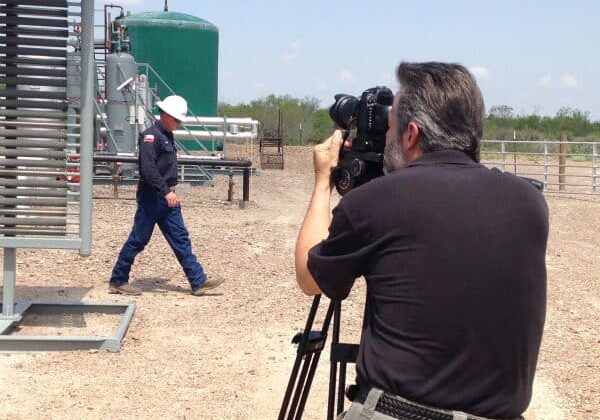
The Deep Dive: Having the lead operator walkthrough the equipment at the manufacturers’ shop can be very beneficial to catching issues before the equipment arrives onsite. Familiarization with the equipment before it arrives can also ensure smooth installation and startup.
Question 10: Provide a Comprehensive Project Schedule, Including Critical Milestones and Information Requirements from the Buyer.
Delays in delivery can result in lost revenue from deferred production.
The Problem: Procurement and manufacturing delays are often caused by incomplete initial information for a project. Unknown requirements or delays in design review can lead to change orders and extended timelines.
What to Request: A detailed Initial Testing Plan or equivalent schedule from the Purchase Order (PO) to the Final Acceptance Date, broken down into key milestones like:
- Engineering Design Freeze.
- Long-Lead Item Procurement.
- FAT Date.
- Ex-Works Date.
- SAT/Commissioning Date.
By proactively identifying and addressing these Top 10 Questions, you move from being a simple buyer to a sophisticated project manager. You will secure a JT Plant that is not just a low-cost capital expense, but a high-performance, long-life asset that maximizes your revenue potential in the competitive natural gas market.
Contact CROFT today!
Schedule a training session today, call our office to talk to a sales representative or email [email protected]