The Part Most People Never Think About: Getting the Gas Ready to Burn
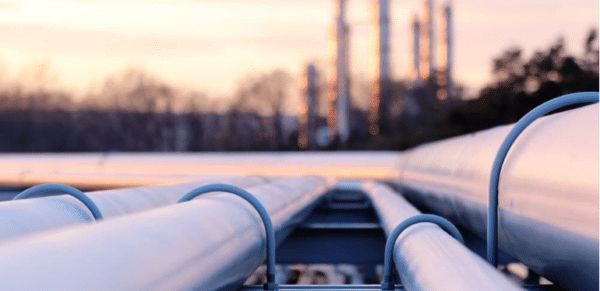
Here's something that doesn't come up in most headlines about data centers and natural gas: raw natural gas, straight out of the ground, isn't usable in its natural state. It carries water vapor, heavy hydrocarbons, particulates, and sometimes hydrogen sulfide. None of which you want anywhere near a sensitive gas turbine or reciprocating engine. Before that gas can fuel a generator sitting behind a data center, it has to be cleaned up, dried out, and conditioned to precise specifications.
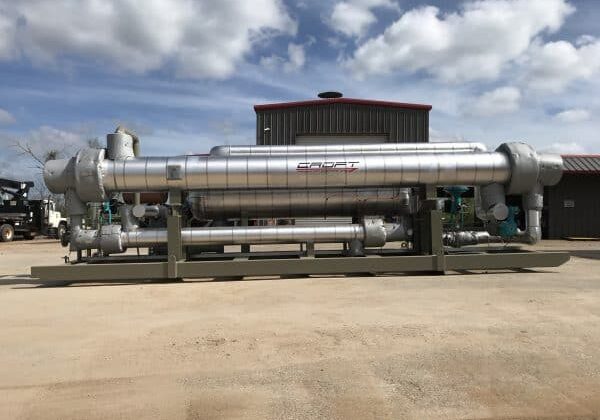
That's where we come in. Equipment providers like Croft Production Systems come into the picture. Croft is a Texas-based, ISO 9001-certified company that's been designing, manufacturing, and leasing natural gas processing equipment for years, primarily serving the oil and gas industry. Their product lineup covers pretty much every stage of getting raw gas ready for use:
Keeping the Equipment That's Already Out There Running
All of this: the fuel-gas conditioning systems, the JT plants, the amine units… assuming the equipment is working the way it's supposed to. And that's not a given. Pipelines, compressor stations, and gas gathering facilities have been running hard for years, and hard-running equipment doesn't stay clean forever. Glycol dehydrators foul up. Amine units pick up contaminants. Scale builds up inside vessels and piping. None of that shows up as a headline, but it's exactly the kind of thing that causes an unplanned shutdown at the worst possible time, say, right when a data center's generators are counting on that gas being clean and on-spec.
That's where
Croft's Equipment Overhaul and Cleanout (EOC) team comes in. Instead of swapping in new equipment, EOC crews work with what's already out there. TEG dehydrators, amine plants, and other processing units at the wellhead, midstream, or gathering facility level, and take them through a full inspection, teardown, deep clean, and reassembly. It's basically a zero-hour overhaul: whatever shape the unit came in, it goes back out running like new. Since the equipment has to come offline to do this safely, Croft's crews move fast; a full overhaul usually takes just a few days, so operators
aren't losing capacity any longer than necessary.
It's not the flashy part of the natural gas story, but it might be the most important. A brand-new gas turbine or a state-of-the-art conditioning skid is only as reliable as the decades-old infrastructure feeding it. Overhaul and cleanout work is what keeps that older equipment from becoming the weak link, quietly making sure the gas supply chain behind every data center stays dependable, long after the ribbon-cutting is over.
Notably, generator fuel gas is listed directly among the applications for Croft's Fuel-Gas Conditioning Systems, the same category of equipment used to feed the reciprocating engines and turbines that power on-site generation. This is the unglamorous but essential work that makes behind-the-meter power generation possible in the first place. A brand-new gas turbine sitting next to a billion-dollar data center is only as reliable as the fuel feeding it. If that gas isn't properly conditioned, you get fouling, corrosion, poor combustion, and unplanned downtime. The last thing anyone wants is a facility running thousands of AI servers that depends on constant, dependable power.
Companies like Croft represent the equipment layer that rarely makes headlines. Everyone talks about the gas turbines, the hyperscalers, the multi-billion-dollar power deals. But behind all of that sits a quieter industry of gas processing specialists making sure the fuel itself is clean, dry, and ready to perform. Whether that gas is destined for a compressor station, a drilling rig, or increasingly, a generator keeping a data center's lights on.
Where This Is Headed
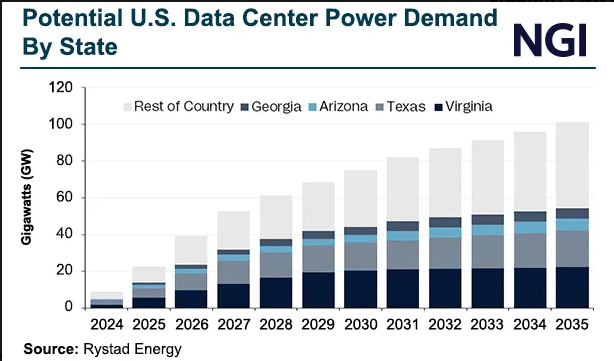
Nobody thinks natural gas is a permanent solution. Most people in the industry describe it as a "bridge fuel", something that can scale quickly enough to meet today's demand while nuclear, geothermal, fuel cells, and next-generation renewables mature enough to take on more of the load. Goldman Sachs estimates behind-the-meter systems could supply a quarter to a third of the incremental power data centers need through 2030, and natural gas is expected to remain a meaningful piece of that mix even as fuel cells and other technologies gain ground.
But for right now, in 2026, if you want to power an AI data center fast, natural gas is the tool for the job. If you’re building, investing, or supplying into this space, pay attention to the full supply chain, from the wellhead, through processing equipment like Croft’s, to the turbine turning gas into electricity, because that is where the infrastructure story behind the AI boom is being built.