The Unlikely Friendship Between AI Data Centers and Natural Gas

Why Natural Gas Became the Data Center Industry's Best Friend

If someone had told me five years ago that natural gas equipment companies would become critical infrastructure partners for the tech industry, I’d have laughed. Data centers and gas wells seemed like they belonged in completely different conversations. Today, that's exactly what's happening, and honestly, it makes a lot of sense once you dig into the numbers.
The AI boom didn't just create demand for chips and cloud storage. It created a power problem so big that the entire electric grid is straining to keep up. And the fuel stepping in to solve that problem, at least for now, is natural gas.
New Capacity Additions:
%

Planned natural gas capacity additions in the U.S. surged to 18.1%, with over one-third of planned new gas capacity slated to directly power data centers.

U.S. Power Generation:
%

Natural gas provides about 43.1% of U.S. total utility-scale electricity generation, followed by coal (16.2%) and renewables (24%).

Projected Spike:
%

By 2028, U.S. data centers are expected to consume between 6.7% and 12% of the nation's total electricity.

The Problem: AI Is Demanding, and the Grid Can't Keep Up

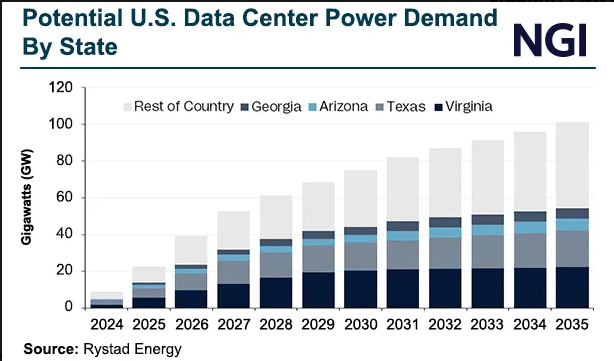
Data centers used to be a rounding error on the electric grid. Not anymore. According to the Department of Energy, roughly 36.6 gigawatts of data center capacity are currently under construction in the U.S., with another 201.5 gigawatts sitting in the planning stages. Some forecasts project that data center power needs could roughly triple over the next decade, going from around 40 gigawatts today to over 100 gigawatts by 2035.
The trouble is, the traditional way of getting power, connecting to the local utility grid, has become painfully slow. Interconnection queues, the waitlist utilities use to hook up new power users, are stretching out five years or longer in some regions. If you're a hyperscaler trying to launch an AI data center on a two-year timeline, a five-year wait for grid power simply doesn't work.
So companies like Microsoft, Meta, Google, and Amazon are doing something they wouldn't have considered a few years ago: building their own power plants right next to their data centers. Or using natural gas generators to convert natural gas into electricity. This is called "behind-the-meter" generation, and it's reshaping the energy landscape.

Why Natural Gas, Specifically?

Renewables get a lot of attention, and rightly so; solar and wind have gotten dramatically cheaper over the past decade. But AI workloads need something renewables alone can't reliably provide: power on demand, 24 hours a day, 7 days a week, regardless of whether the sun is shining or the wind is blowing.
Natural gas checks that box. It's dispatchable, meaning you can turn it on and rely on it running near-constantly. Gas plants can operate at capacity factors exceeding 80%. It's also domestically abundant. The U.S. produces roughly a quarter of the world's natural gas supply, and production is expected to keep climbing through the rest of the decade.
There's also a practical, boots-on-the-ground reason gas is winning out: natural gas interconnection costs have historically run around $24 per kilowatt, compared to well over $250 per kilowatt for solar and over $300 for offshore wind. When you're racing to get a data center online, that cost and speed advantage matters enormously.
Put simply,  natural gas is filling the gap between "we need power right now" and "the grid will eventually catch up."

How This Is Actually Playing Out

The numbers behind this shift are striking. Data center-related natural gas demand in the U.S. could reach somewhere between 6 and 7 billion cubic feet per day by 2030. A roughly 20% jump over 2025 power-sector demand. The pipeline of planned natural gas capacity for data centers has exploded, too, growing from about 24 gigawatts at the start of 2025 to 64 gigawatts by early 2026.

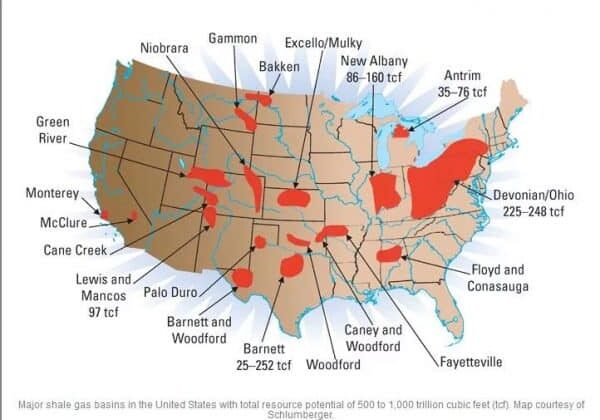
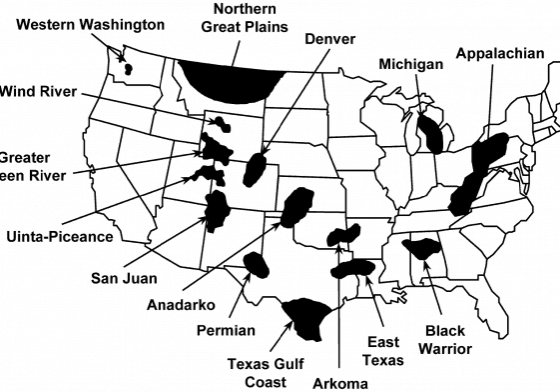
Texas and Virginia have emerged as the epicenters of this trend, and it's not a coincidence. Northern Virginia sits close to Marcellus shale gas production, while the Dallas-Fort Worth corridor benefits from its proximity to the Permian Basin. Being near the gas supply makes fueling these behind-the-meter plants a lot more straightforward.
You can see the shift in what companies are actually building. Meta struck a deal with Entergy in Louisiana to power a $10 billion data center using gas-fired plants. Crusoe used aeroderivative turbines, the same tech that powers jet engines, to fuel its massive Stargate data center campus in Abilene, Texas. Meta's El Paso data center reportedly draws power from more than 800 mobile mini-turbines. Caterpillar has been supplying gas engines and generator sets for data center campuses across multiple states.
It's not all smooth sailing, though. Gas turbine manufacturing hasn't scaled fast enough to match demand, and waitlists for the most efficient combined-cycle turbines now stretch into the early 2030s. That's pushed some operators toward smaller, less efficient equipment just to get power online faster, which comes with its own tradeoffs in emissions and cost. There's also a growing public debate about who ends up footing the bill, since heavy gas demand from data centers can ripple through commodity markets and affect prices for everyone else who heats their homes or runs factories on natural gas.
Data center projection

The Part Most People Never Think About: Getting the Gas Ready to Burn

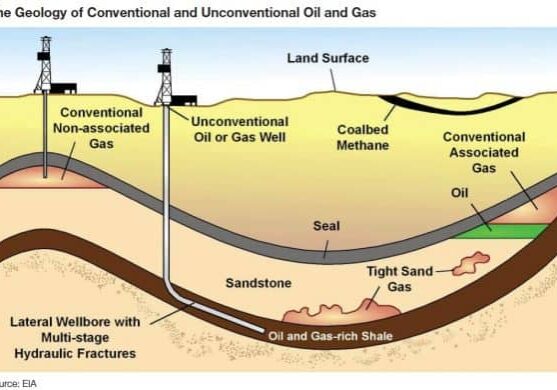
Here's something that doesn't come up in most headlines about data centers and natural gas: raw natural gas, straight out of the ground, isn't usable in its natural state. It carries water vapor, heavy hydrocarbons, particulates, and sometimes hydrogen sulfide. None of which you want anywhere near a sensitive gas turbine or reciprocating engine. Before that gas can fuel a generator sitting behind a data center, it has to be cleaned up, dried out, and conditioned to precise specifications.
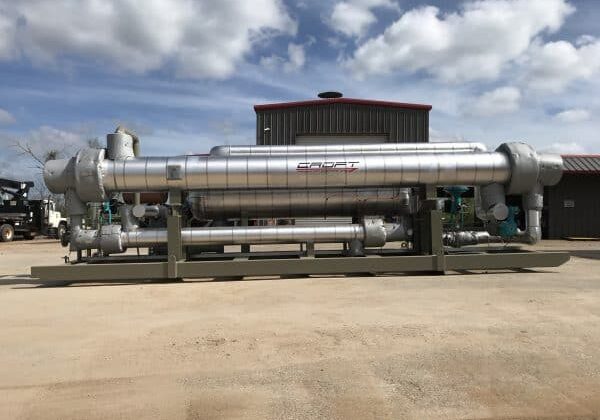
That's where we come in. Equipment providers like Croft Production Systems come into the picture. Croft is a Texas-based, ISO 9001-certified company that's been designing, manufacturing, and leasing natural gas processing equipment for years, primarily serving the oil and gas industry. Their product lineup covers pretty much every stage of getting raw gas ready for use:

Keeping the Equipment That's Already Out There Running

All of this: the fuel-gas conditioning systems, the JT plants, the amine units… assuming the equipment is working the way it's supposed to. And that's not a given. Pipelines, compressor stations, and gas gathering facilities have been running hard for years, and hard-running equipment doesn't stay clean forever. Glycol dehydrators foul up. Amine units pick up contaminants. Scale builds up inside vessels and piping. None of that shows up as a headline, but it's exactly the kind of thing that causes an unplanned shutdown at the worst possible time, say, right when a data center's generators are counting on that gas being clean and on-spec.
That's where Croft's Equipment Overhaul and Cleanout (EOC) team comes in. Instead of swapping in new equipment, EOC crews work with what's already out there. TEG dehydrators, amine plants, and other processing units at the wellhead, midstream, or gathering facility level, and take them through a full inspection, teardown, deep clean, and reassembly. It's basically a zero-hour overhaul: whatever shape the unit came in, it goes back out running like new. Since the equipment has to come offline to do this safely, Croft's crews move fast; a full overhaul usually takes just a few days, so operators aren't losing capacity any longer than necessary.
It's not the flashy part of the natural gas story, but it might be the most important. A brand-new gas turbine or a state-of-the-art conditioning skid is only as reliable as the decades-old infrastructure feeding it. Overhaul and cleanout work is what keeps that older equipment from becoming the weak link, quietly making sure the gas supply chain behind every data center stays dependable, long after the ribbon-cutting is over.
Notably, generator fuel gas is listed directly among the applications for Croft's Fuel-Gas Conditioning Systems, the same category of equipment used to feed the reciprocating engines and turbines that power on-site generation. This is the unglamorous but essential work that makes behind-the-meter power generation possible in the first place. A brand-new gas turbine sitting next to a billion-dollar data center is only as reliable as the fuel feeding it. If that gas isn't properly conditioned, you get fouling, corrosion, poor combustion, and unplanned downtime. The last thing anyone wants is a facility running thousands of AI servers that depends on constant, dependable power.
Companies like Croft represent the equipment layer that rarely makes headlines. Everyone talks about the gas turbines, the hyperscalers, the multi-billion-dollar power deals. But behind all of that sits a quieter industry of gas processing specialists making sure the fuel itself is clean, dry, and ready to perform. Whether that gas is destined for a compressor station, a drilling rig, or increasingly, a generator keeping a data center's lights on.

Where This Is Headed

Nobody thinks natural gas is a permanent solution. Most people in the industry describe it as a "bridge fuel", something that can scale quickly enough to meet today's demand while nuclear, geothermal, fuel cells, and next-generation renewables mature enough to take on more of the load. Goldman Sachs estimates behind-the-meter systems could supply a quarter to a third of the incremental power data centers need through 2030, and natural gas is expected to remain a meaningful piece of that mix even as fuel cells and other technologies gain ground.
But for right now, in 2026, if you want to power an AI data center fast, natural gas is the tool for the job. If you’re building, investing, or supplying into this space, pay attention to the full supply chain, from the wellhead, through processing equipment like Croft’s, to the turbine turning gas into electricity, because that is where the infrastructure story behind the AI boom is being built.

Sources: TechCrunch, RBC Capital Markets, U.S. Energy Information Administration, American Action Forum, BCG, Utility Dive, Grist, Goldman Sachs Research,Croft Production Systems (croftsystems.net), American Action Forum, and EIA.Gov. 

Posted on Jul 15, 2026 by Kelly Gebhart

Scroll to Top