
Introduction
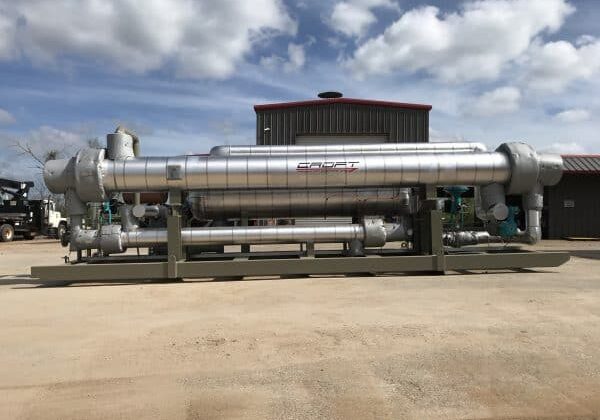
Today we're at a natural gas dehydration unit, often called a glycol system. Now these systems are used to dehydrate the natural gas by removing the water vapor that's present in the natural gas to reduce corrosion and prevent hydrate formation. Now the way this system works is the gas will enter through the contact tower. The contact tower will contact the natural gas with the glycol, where it absorbs the water vapor. That glycol will then go into the regeneration side of the unit, where we boil that water off, purify the glycol before sending it back to the contact tower. With pump issues, this will shut down the whole circulation process.
Pre-Check Glycol Pumps
So walking up, I can obviously hear the pumps making some noises. First thing I'm gonna check, make sure all valves are open speed controls. And I'm gonna go on and check my high-pressure filter. Make sure that we don't have any high dp pumps not struggling. We're not creating a huge differential after after high pressure filters. Other filters are gonna be a low-pressure lean filter, and verify it as well. Make sure that we don't have a dp on it.
Check Glycol Pumps for Leaks
So these are the areas that are gonna start to leak. First, normally, if you start seeing some kind of fluid on the bottom, this top block right here, it'll start leaking around the seams. Also these, these, uh, blocks right here around the edges, they'll leak. And then also you want to look out for your nipples going into the block, the threads over time. They mean it; they tend to eat them up.
Check High-Pressure Filter
So on TEG systems all across, we add differential gauges on them. Anytime you have an issue with the pump struggling, the pump hitting really hard, normal, the first thing to do is come over and check your differential gauge.
Check Low-Pressure Filter
So when I come over here to the low-pressure glycol filter, what am I looking for? Ideally, I would like it between zero to five. Anything around ten on the differential pressure. Better be ready to start changing filters.
Tuning Glycol Pumps
Review your well parameters coming into the Glycol Dehydrator. Three parameters are needed Volume, Temperature and Pressure. Volume can typically be found on the well meter, and pressure and temperature can be found on the contact tower. This will give you how many lbs/MMcf of water needs to be removed. Then you can use your chart or CROFT APP and tune the pumps to the required circulation rate. Then you will time the strokes until it is tuned.
Conclusion
In conclusion, dehydration systems are critically important pieces of infrastructure as part of gas processing. Pump issues can have detrimetnal effect on the goal and efficiency of water removal.