
From “Petroleum Graveyard” to America’s Energy Engine: The History of the Permian Basin Oil Boom
There’s a good chance that if you’re reading this, you’ve spent time on the roads out here, the flat horizon, the pump jacks nodding along the highway, the smell of diesel and dust that just becomes part of the air. It’s easy to forget that none of this was inevitable. A hundred years ago, most people looking at this same stretch of West Texas figured it was worthless. Here’s how they were proven very, very wrong.
Land Nobody Wanted
Back in the early 1900s, nobody was excited about this dirt. When the University of Texas Board of Regents kicked around the idea of selling off huge tracts of land in Crockett, Reagan, and Upton counties in 1916, most people saw scrubland good for maybe running cattle and not much else. A geologist named Dr. Johan A. Udden talked the board out of selling, arguing there might be oil hiding beneath all that nothing.
Early drilling didn’t do much to change anyone’s mind. The rigs of the day were slow, cable-tool contraptions, and well after well came up dry. West Texas earned a rough nickname among the prospectors who tried and failed out here: the “petroleum graveyard.” It wasn’t until 1920 that things started to shift, when a modest well in Mitchell County, the W.H. Abrams No. 1, started producing a steady trickle of oil. Not much, but enough to make people wonder if the graveyard had some life in it after all.
The Well That Changed Everything
The real moment came a few years later, over in Reagan County. A group of investors led by Rupert P. Ricker and Frank Pickrell had leased hundreds of thousands of acres of University of Texas land, chasing oil nobody could prove was even down there. Money was hard to come by. As the story goes, some nervous investors up in New York got so worried about their money that they asked a priest for his blessing before signing on. That’s supposedly how the well got its name: Santa Rita, patron saint of impossible causes.
It took almost two years of grinding, inch-by-inch drilling before anything happened. Then, on the morning of May 28, 1923, the ground started to shake. The well roared to life, throwing crude oil over the top of the derrick and coating the ground for hundreds of yards around. It wasn’t even a huge well by later standards, somewhere between 30 and 100 barrels a day, but it didn’t need to be huge. It just needed to prove the oil was real. And it did. Word spread fast, drilling crews poured into the region, and towns like Midland and Odessa went from sleepy railroad stops to boomtowns almost overnight.

The Long Middle Stretch
For most of the twentieth century, getting oil out of the Permian meant drilling straight down and hoping you hit something good, mainly in formations like the San Andres and Spraberry. Rigs got better through the '50s, '60s, and '70s, and companies drilled thousands of these vertical wells across the basin. But there was a catch. Formations like the Spraberry held plenty of oil, but the pressure dropped off fast, and a lot of that oil just wouldn’t come up no matter what anyone tried. People started calling parts of the Spraberry the “world’s largest unrecoverable oil reserve,” which is a pretty deflating thing to call an oil field.
By the early 2000s, most folks in the industry had written the Permian off as an old, tired basin. Not dead, exactly, but past its prime, coasting toward a slow decline. Nobody was expecting a second act.
Then Everything Changed Again
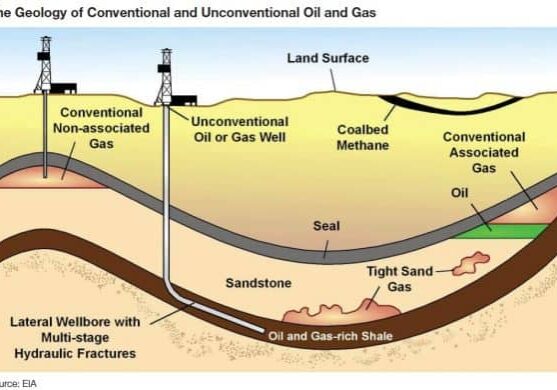
That’s exactly what happened, though. Starting in the mid-2000s and really picking up speed after 2008, two technologies changed the math completely: horizontal drilling and multi-stage hydraulic fracturing. Instead of drilling straight down and hoping, operators figured out how to steer a well sideways for miles through thin bands of oil-soaked rock, then fracture that rock to let decades (millions of years, really) of trapped oil finally flow.
It turned out the Permian was practically built for this kind of drilling. The basin isn’t one big oil-soaked sponge; it’s more like a layer cake, with formations like the Wolfcamp, Spraberry, and Bone Spring stacked on top of each other, some of those layers well over a thousand feet thick. Suddenly, a single well site could reach several of those layers instead of just one. The old “unrecoverable” oil wasn’t unrecoverable anymore; it just needed better tools.
What followed wasn’t a modest bounce-back. It was the biggest boom the basin had ever seen, and it’s a big reason the U.S. became the world’s top oil producer.
Where Things Stand Now
The numbers today are honestly a little hard to wrap your head around. The Permian now supplies somewhere around 45 to 48% of all U.S. crude oil, and that share keeps climbing. There are more than 7,000 active fields spread across more than 80,000 square miles of West Texas and southeastern New Mexico, with an entire economy of pipelines, service companies, and small towns built around keeping it all running.
Just ten counties in the Permian accounted for 93% of all U.S. oil production growth between 2020 and 2024. Ten counties, out of the whole country. That tells you pretty much everything about how much this region matters right now.
Still Being Written
More than a hundred years after that well roared to life outside Big Lake, the Permian still runs on the same basic ingredients: stubbornness, ingenuity, and a lot of people willing to do hard, unglamorous work in tough conditions because it matters. The equipment’s changed: cable-tool rigs gave way to horizontal wells and modern completions, but the basic character of the place hasn’t.
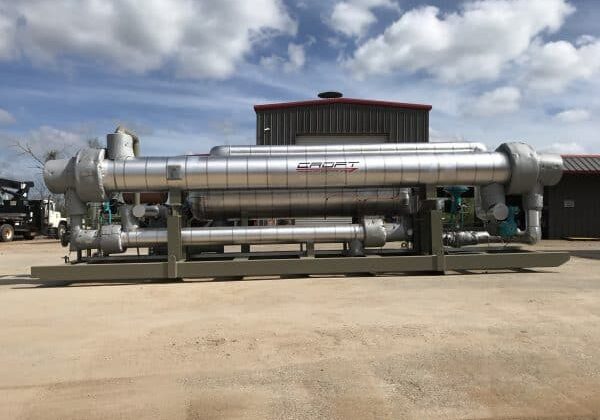
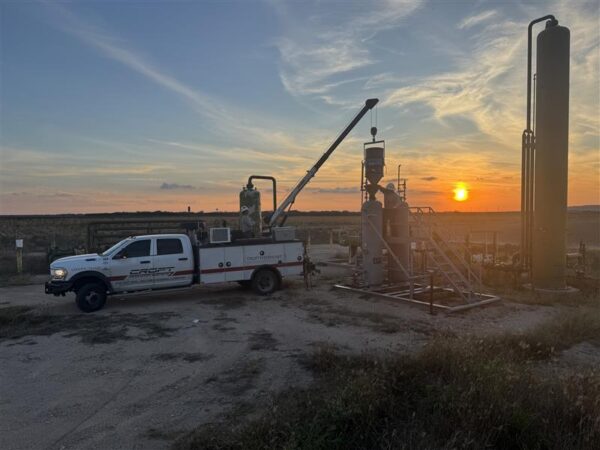
At Croft Production Systems, we get to be part of that ongoing story every day, out here alongside the crews and operators who keep this basin producing. It’s a good history to be a small part of.
- Texas State Historical Association, “Santa Rita Oil Well”
- American Oil & Gas Historical Society, “Santa Rita Taps Permian Basin”
- Authentic Texas, “The Legacy of the Permian Basin”
- Permian Basin Petroleum Association, “Santa Rita No. 1”
- Permian Basin Oil and Gas Magazine, “The Well That Launched the Permian”
- Journal of Petroleum Technology (SPE), “Permian Basin Oil History: Mirroring the Rise in Hydraulic Fracturing”
- Enverus, “Permian Basin: Midland Basin” and “Permian Basin Guide”
- Federal Reserve Bank of Dallas, “Shale Oil Boom Gave Permian Basin a Second Life”
- U.S. Energy Information Administration, “Ten Counties in the Permian Basin Account for 93% of U.S. Oil Production Growth Since 2020” and “EIA Refines Estimates for Permian Tight Oil and Shale Gas Production”
- Permian Basin Oil and Gas Magazine, “U.S. Remains Leader in Oil Production; Permian Accounts for 48 Percent of Total”