
The Equipment Doing the Quiet Work Behind Every Gas-Powered Data Center
Everyone wants to talk about the gas turbines. They're the exciting part of this story, the big shiny machines sitting next to a billion-dollar server farm, turning fuel into electrons in real time. But turbines and reciprocating engines are picky eaters. Hand them raw gas straight out of the ground, and you're asking for fouling, corrosion, and a very expensive unplanned outage. Before any of that gas ever reaches a combustor, it has to be cleaned up and brought into spec. That's the part nobody puts in a press release, and it's exactly where Croft Production Systems has been working for years.
We touched on the bigger picture in our last post about why natural gas has become the go-to fuel for AI data centers. This time, we want to zoom in on three specific pieces of equipment that make behind-the-meter gas power usable: Fuel Gas Conditioning Systems (FCS), Amine Plants, and JT (Joule-Thomson) Plants. If you're trying to understand the supply chain behind a gas-fired data center campus, these three are a good place to start.
Why Raw Gas and Turbines Don't Mix
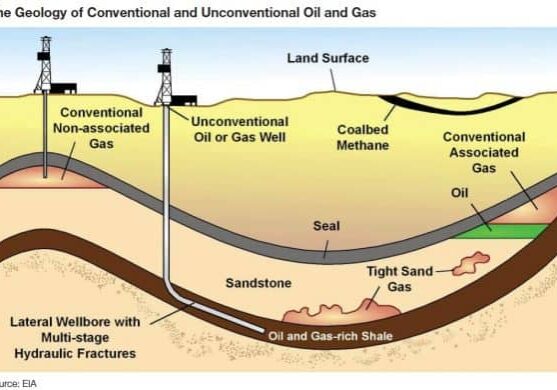
Natural gas coming off a wellhead or a gathering line isn't a finished product. It's carrying water vapor, heavier hydrocarbons, particulates, and sometimes hydrogen sulfide, none of which a sensitive turbine or engine wants to see. Industry fuel specifications, including GE's well-known heavy-duty turbine fuel gas standard, spell out strict limits on things like hydrocarbon dew point and contaminant levels for exactly this reason. If liquids condense from the gas stream within the fuel system, you get inconsistent combustion, corrosion, and equipment that wears out faster than it should. That's a well-documented problem in the power generation world, not something specific to data centers, but it becomes a much bigger deal when the equipment in question is keeping thousands of AI servers running.
So somewhere between the wellhead and the turbine, that gas needs to be dried out, stripped of heavy hydrocarbons, sweetened if it's sour, and conditioned to a consistent BTU content. That is the job.
Fuel Gas Conditioning Systems (FCS): The All-in-One Package
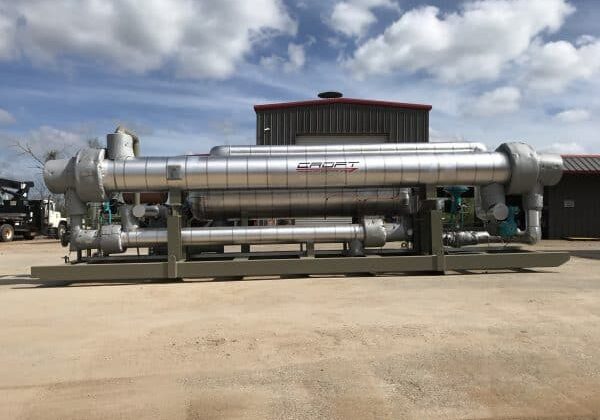
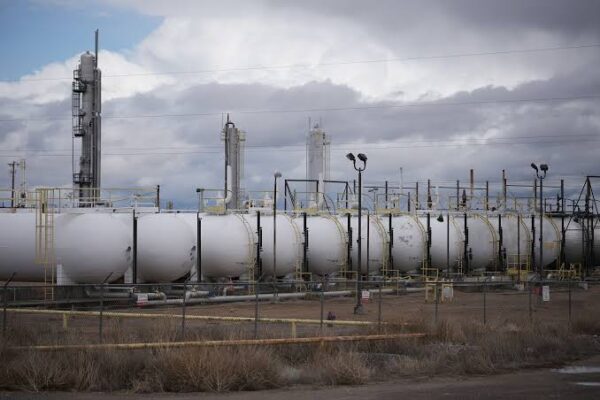
Croft's FCS units are skid-mounted systems built to strip water and knock down high BTU content so the gas coming out the other end is safe and consistent for compressor engines, generators, and instrumentation. What makes the FCS interesting is that it's really three Croft technologies bundled into one package: an Ambient Cooling System cools the gas first, a Joule-Thomson system pulls out hydrates and hydrocarbon liquids, and a Passive Dehydration System finishes the job by pushing the dew point well below pipeline spec using Croft's EnviroDRI desiccant.

Generator fuel gas is listed directly among the applications on Croft's FCS product page, right alongside compressor station fuel, drilling rig fuel, and instrumentation gas. That's notable because generator fuel gas is exactly what feeds the reciprocating engines and turbines sitting behind a data center's meter. The units come in a range of sizes (FCS 25, 50, 100, and 500), so an operator can scale the equipment to whatever volume the site actually needs rather than overbuilding. Every Croft lease also comes with a dedicated technician and a 30-day service cycle, which matters a lot when the gas quality directly determines whether a generator fleet stays online.
JT Plants: Pulling the Heavy Stuff Out

Joule Thomson plants solve a slightly different problem. As gas passes through a JT valve, it takes a pressure drop and cools down, sometimes to as low as negative 20 degrees Fahrenheit. That temperature drop causes heavier hydrocarbons like propane, butane, pentane, and hexane to condense out of the stream, along with any water that would otherwise cause hydrate formation. What's left is a leaner, drier gas with a lower BTU content and a lower water dew point, which is exactly what a lot of engines and turbines are looking for.
Croft's JT skids handle gas streams from 1 up to 10 MMcfd, with standard unit sizes at 2, 5, and 10 MMcfd plus custom sizing for anything in between. The recovered hydrocarbon liquids aren't waste either. Those NGLs can be captured and sold separately, which helps offset the cost of running the unit in the first place. For an operator feeding gas to on-site generators, a JT plant is often the piece of equipment standing between "gas that will foul an engine" and "gas that meets spec."
Amine Plants: Sweetening Sour Gas
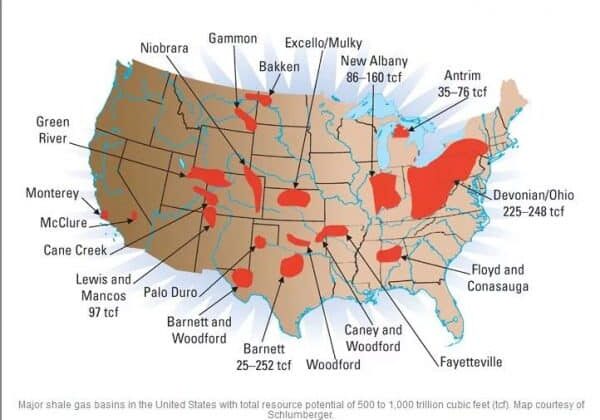
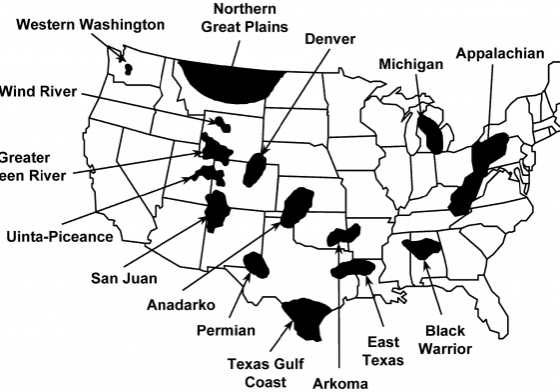
Not all gas is created equal, and a fair amount of it, especially in basins like the Permian, comes out of the ground sour, meaning it carries hydrogen sulfide and CO2. Neither of those is something you want anywhere near a turbine or a person. H2S is toxic and corrosive, and CO2 combines with water to form carbonic acid, which eats away at metal over time. Amine plants, also called Gas Sweetening Systems, strip both compounds out through a chemical absorption process, bringing the gas down to pipeline quality and making it safe to burn.

Croft builds these as rugged, skid-mounted units with circulation rates up to 10 GPM, and they're available for split stream applications when an operator needs to treat higher H2S and CO2 volumes at once. As a well's production declines, extra units can simply be pulled off location, so operators aren't stuck paying to run oversized equipment they no longer need. For a data center campus pulling gas from a sour basin, this step isn't optional. It's the difference between fuel that's usable and fuel that will slowly destroy the equipment burning it.
Why This Matters More Now Than It Used To
The scale of what's being built right now is hard to overstate. Behind-the-meter natural gas generation capacity announced by data center developers in the U.S. reached roughly 101 gigawatts as of 2026, according to RBC Capital Markets research, with gas turbines making up the largest share of that buildout and Texas leading every other state in planned capacity. Separate analysis from Enverus estimates that a single gigawatt scale data center running on gas could need somewhere around 140 million cubic feet of gas per day. That's a lot of fuel that has to be conditioned, dried, and in some cases sweetened before it ever reaches a generator.
None of that volume matters if the gas isn't clean enough to burn reliably. A turbine or engine that trips offline because of wet, contaminated, or off-spec fuel doesn't care how much the data center behind it cost to build. That's really the whole argument for paying attention to companies like Croft. The gas processing layer isn't glamorous, and it's never going to get the headlines that a new hyperscale campus or a multi-billion-dollar power deal gets. But FCS units, JT plants, and amine systems are the reason the gas reaching those generators is actually usable in the first place. As more of this behind the meter buildout moves forward, especially in gas rich regions like the Permian Basin and the broader Texas corridor, that layer of the supply chain is only going to matter more, not less.
Sources: Croft Production Systems (croftsystems.net), RBC Capital Markets, Enverus, GE Power (Specification for Fuel Gases for Combustion in Heavy Duty Gas Turbines), Power Engineering magazine.